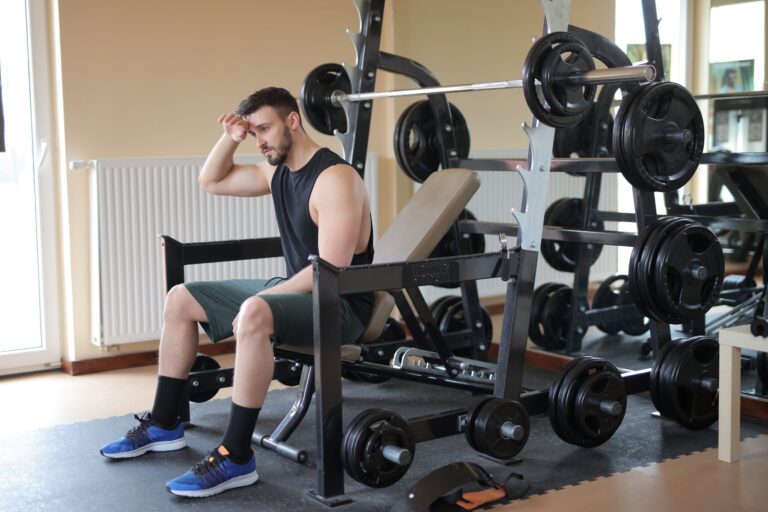
The Best Time of Day to Work Out
This question comes up constantly, and the honest answer is more interesting than a single right time.
Your body actually performs differently depending on when you train,
and the best choice depends partly on what you are training for,
and even on whether you are a man or a woman.
Why Timing Affects Performance at All

Your body runs on an internal clock that affects things like body temperature, hormone levels,
and muscle function throughout the day.
Body temperature tends to be lowest in the early morning and peaks in the late afternoon or early evening.
Since warmer muscles tend to perform better, with improved flexibility and faster reaction time, this is part of why athletic performance and strength often peak later in the day.
One study comparing athletes tested in the morning versus the evening found strength performance was noticeably higher in the evening group,
tied directly to this natural rise in body temperature.
Morning Training Has Its Own Advantages

Training in the morning is not simply the weaker option.
Research has found that morning exercise,
done in a fasted state before breakfast, can increase fat oxidation,
meaning your body pulls more from fat stores for fuel,
compared to the same workout done later in the day.
There is also a circadian benefit specific to mornings.
Exercise done earlier in the day tends to help advance your body clock,
which supports easier waking and can improve sleep quality at night.
Morning workouts have also been shown to help habits form faster,
since a consistent morning routine tends to feel automatic sooner than the same routine done at night.
The Difference Between Men and Women Is Real

This part surprises a lot of people.
A twelve week study comparing morning and evening exercise found that the benefits were not identical between men and women.
For women, morning exercise led to greater abdominal fat loss, lower blood pressure, and increased lower body muscle power.
Evening exercise, on the other hand, led to a greater increase in upper body strength, power, and endurance, along with an improved mood.
For men, evening exercise was linked to lower blood pressure and fatigue, along with increased fat burning.
This does not mean one time is right and the other is wrong.
It means your specific goals and your body may respond differently depending on when you train.
What Actually Matters Most

Despite all of this, nearly every researcher in this space agrees on one thing.
Timing provides a fairly small edge, somewhere in the range of a 5 to 10 percent optimization.
Consistency, effort, and simply showing up regularly matter far more than finding the mathematically perfect hour.
One circadian biologist put it simply.
The best time to exercise is whenever you are actually going to do it.
A workout done consistently at a slightly less optimal time will always beat a perfectly timed workout that gets skipped half the time.
A Simple Way to Decide
If you are chasing a specific goal, morning fasted training may support fat loss slightly more,
while afternoon or evening sessions may support strength and upper body power.
But if you are still building the habit itself, choose whichever time you can realistically stick to for the next few weeks.
Once training becomes consistent, you can always experiment with shifting the time to match your specific goals.