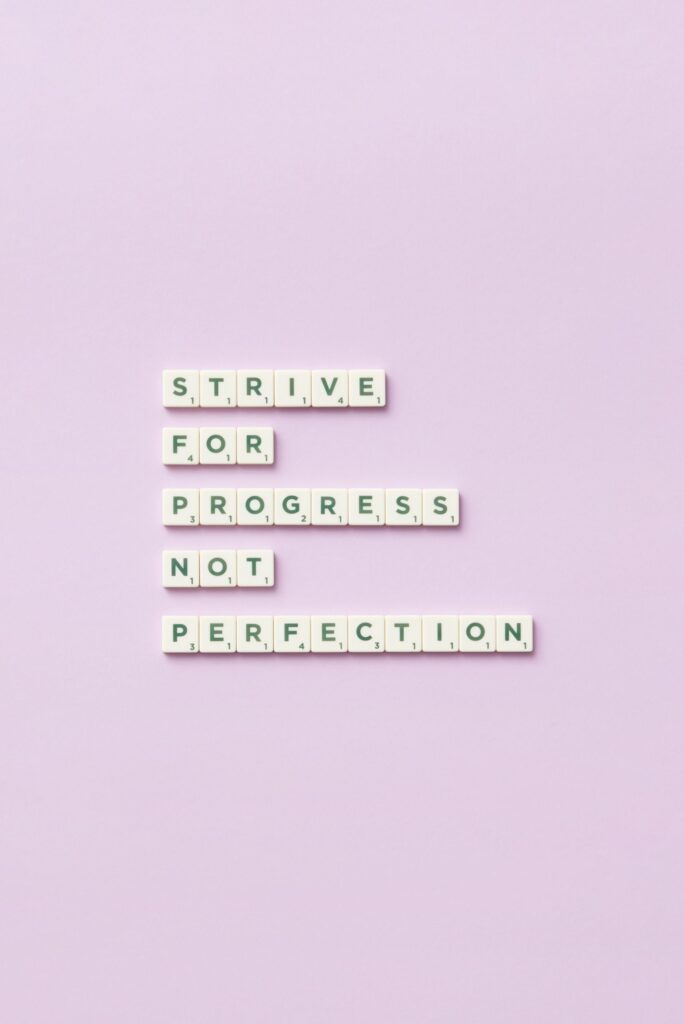
Progress Over Perfection, What That Actually Looks Like
You miss one workout and decide the whole week is already ruined.
You eat one thing off plan and figure the day is a write off, so you might as well keep going.
If this sounds familiar, you are not alone, and there is a name for what is happening.
The Thinking Pattern Behind This

This is called all or nothing thinking,
and it is one of the most common ways perfectionism shows up in everyday life.
It treats progress as binary, either you are succeeding completely or you have failed entirely,
with no room for anything in between.
The problem is that real growth almost never works this way.
It is messy, uneven, and full of small steps forward mixed with occasional steps back.
All or nothing thinking does not leave room for that reality,
which means it sets people up to feel like they are failing even when they are actually making progress.
Why This Pattern Is So Costly

Research links this kind of rigid thinking to real consequences,
including increased stress, anxiety, and lower overall life satisfaction.
It can also stall the very progress someone is trying to make.
One recent paper on perfectionism in organizations put it simply.
People who push for perfection often end up harming their own progress,
since the fear of falling short leads to overthinking, procrastination,
and sometimes avoiding the task altogether.
This shows up constantly with health habits.
Someone skips one gym session and skips the rest of the week too.
Someone eats one dessert and decides the whole day, or week, is already off track.
The all or nothing thought is what turns one small moment into a much bigger setback,
not the moment itself.
What Progress Actually Looks Like

Progress is rarely a straight line.
It looks like showing up most days, not every day.
It looks like eating well most of the time,
with room for things that are not perfectly aligned with a plan.
It looks like missing a workout and simply doing the next one,
without treating the miss as proof that the whole effort has failed.
This is sometimes summarized using the idea that a large portion of results tend to come from a smaller portion of consistent effort,
not from flawless execution of every single detail.
Focusing on the handful of habits that matter most,
done consistently,
tends to outperform trying to do everything perfectly and burning out instead.
How to Start Noticing This Pattern

You do not need to eliminate high standards for yourself.
The goal is simply to notice when a single slip turns into a much bigger internal story about failure.
A few questions worth asking in the moment:
- Did I actually fail, or did I just have one imperfect moment
- Would I judge someone else this harshly for the same thing
- What is the next small step I can take right now, instead of writing off the whole day or week
A Gentle Reminder
If perfectionism feels like a pattern that runs deeper than daily habits,
tied to anxiety, low self worth, or difficulty functioning day to day,
it is worth talking to a therapist.
This kind of thinking often has roots that go beyond simple mindset shifts,
and support can help in ways a single article cannot.
For everything else, remember this.
One missed workout, one imperfect meal, one hard day, none of it erases the progress you have already made.
Progress was never supposed to be perfect.
It was only ever supposed to be steady.