The 10-Minute No Equipment Morning Workout
Editors reshuffle the same six exercises across most versions of this content, without explaining why timing matters.
This one is different we’re going to look at what’s actually happening in your body in the first 30 minutes after waking, why that window is uniquely powerful,
and then give you a workout built specifically to use it no equipment, no gym, no 5 a.m. alarm required.
Why Morning Movement Resets Your Body
Your body runs on a roughly 24-hour internal clock, governed by a master pacemaker in your brain called the schismatic nucleus.
This clock doesn’t just control when you feel sleepy it times the release of cortisol,
the hormone most people associate with stress but which is also your body’s natural wake up signal.
Cortisol naturally rises sharply in the first hour after waking and gradually tapers off across the day.
Here’s the part most fitness content leaves out exercise timing doesn’t just burn calories it actively shifts your circadian phase.
Research on exercise chronology has found that morning activity tends to induce what’s called a “phase advance” essentially nudging your entire internal clock earlier.
In practice, that means an early workout can make it easier to feel alert sooner in the morning and easier to feel sleepy at a reasonable hour that night,
because you’re reinforcing the same clock that governs both ends of your day.
Compare that to an intense evening workout high intensity exercise done late in the day can interfere with melatonin release,
the hormone responsible for making you feel drowsy which is part of why hard training sessions right before bed can leave you wired instead of tired.
The Sleep Payoff

This is the detail that changes how you should think about a “morning workout”
you’re not just working out in the morning,
you’re using morning movement as a tool to engineer better sleep that night.
Consistent morning exercise has been linked to lower post waking cortisol over time and improved sleep quality not because the workout itself is exhausting,
but because it reinforces a stable circadian rhythm, and a stable rhythm is what produces deep, consolidated sleep.
And critically you don’t need much.
Research on exercise and sleep quality shows measurable benefits from movement as brief as 5–10 minutes,
done consistently,
done close to waking.
The threshold for benefit is much lower than the fitness industry usually implies.
Consistency beats duration here a 4 minute routine you actually do every day will move the needle further than a 45 minute routine you do twice a month.
The Workout. 4 Rounds, No Equipment,

Do this within 30–45 minutes of waking,
ideally with a glass of water first and some natural light if you can get it.
Round structure: Each move for 40 seconds, 20 seconds rest, repeat the block twice through.
Total time about 10 minutes including transitions.
- Bodyweight squats wakes up your largest muscle groups (quads, glutes, hamstrings) and raises heart rate faster than almost any other move on this list,because you’re activating so much muscle mass at once.
- Arm circles + shoulder rolls after hours in a static sleep position, your shoulders and upper back are stiff and under oxygenated. This isn’t filler; it’s mobility your joints actually need before anything else.
- Plank hold activates your entire core without impact, which matters first thing in the morning when your spine and joints are still “waking up” and aren’t ready for high impact loading.
- Jumping jacks (or step-out jacks for a lower-impact option) the clearest cardio signal in the sequence; this is the move that most directly spikes heart rate and tells your nervous system “we’re awake now.”
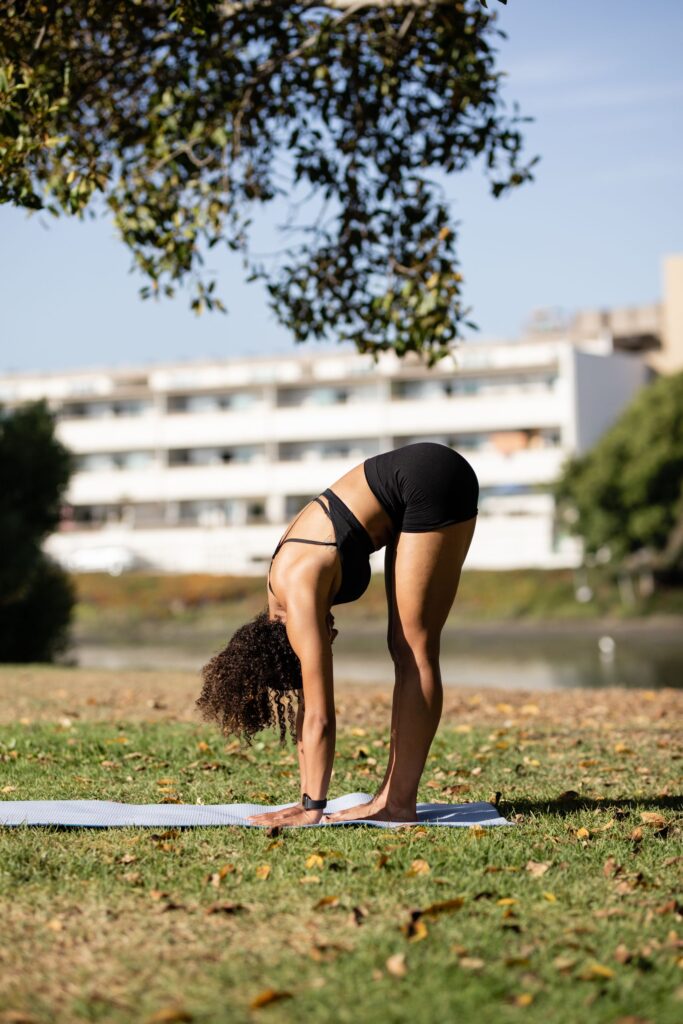
Cool-down (60 seconds): Standing forward fold into a slow roll-up, then 3 deep breaths with arms overhead.
This isn’t optional it’s what signals to your nervous system that the “alert” phase is complete and you can transition into your day without residual tension.
What to Expect and What Not to Expect

You will not “feel the burn” in the way a 45-minute gym session delivers it,
and that’s fine that’s not the job this workout is doing.
What you’re more likely to notice,
usually within 1–2 weeks of consistency:
- Waking up slightly easier, even on the same amount of sleep
- Feeling less foggy in the first hour of your day
- Falling asleep a bit more easily at night, since you’re reinforcing rather than fighting your circadian rhythm
If you’re looking for strength gains or visible physique change,
this routine is a foundation,
not the whole plan pair it with 2–3 strength sessions later in your week
The One Rule That Matters More Than the Exercises
Do it small enough that skipping it feels harder than doing it.
If 10 minutes feels like too much some mornings, do one round.
The physiological benefit comes from the consistency of the signal to your circadian clock not from any single “perfect” session.
A messy streak beats a flawless week you abandon.